Mirror mode and glass
Mirror mode and beam-splitter glass, explained
Beam-splitter glass puts the script directly in front of the lens, which is why professional eye contact looks effortless. The trade is one extra step: the text must be flipped so the reflection reads correctly.
Updated August 23, 2026
01
What the glass actually does
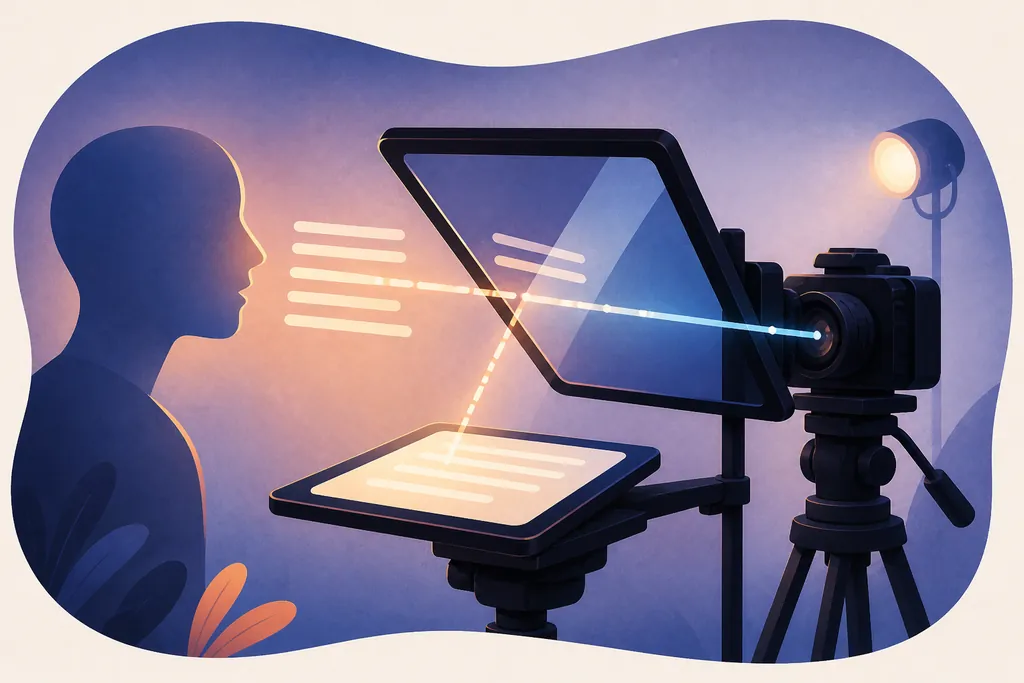
A teleprompter rig holds a piece of partially reflective glass at 45 degrees in front of the lens. A screen below or above the glass displays the script, and the speaker reads the reflection while the camera records straight through the glass. Because the words sit on the same axis as the lens, the speaker appears to look directly at the viewer.
02
When to mirror horizontally
A single reflection reverses text left to right, the same way a bathroom mirror does. Horizontal mirror mode flips the image in software so the reflected version reads normally. If your screen sits below or above the glass and you read its reflection, mirror mode should be on; if you read the screen directly with no glass, it should be off.
Test it the easy way: put a word with clear direction, such as "STOP," on screen and look at the glass. If it reads backwards, toggle mirror mode.
03
When vertical flip is the right switch
Some setups need a second flip. A screen mounted face-down above the glass reflects text that is also upside down from the speaker's view, and some external displays apply their own rotation. Vertical flip handles that axis. Change one setting at a time and check the glass after each change, because stacking both flips accidentally produces text that only reads correctly from inside the rig.
04
Check alignment before the take
A few minutes of geometry saves a reshoot.
- Center the lens behind the glass, not peeking over its edge.
- Align the script column with the lens so your eyes sit on axis.
- Use the lowest screen brightness that still reads clearly.
- Kill reflections behind you with a dark hood or cloth over the camera.
05
A test rig is enough to learn on
A tablet and an inexpensive beam-splitter mount will teach you everything about mirror mode before you commit to studio glass. Record thirty seconds through the rig, watch the playback for eye line and glare, and adjust the font size and column width until reading disappears from your face.